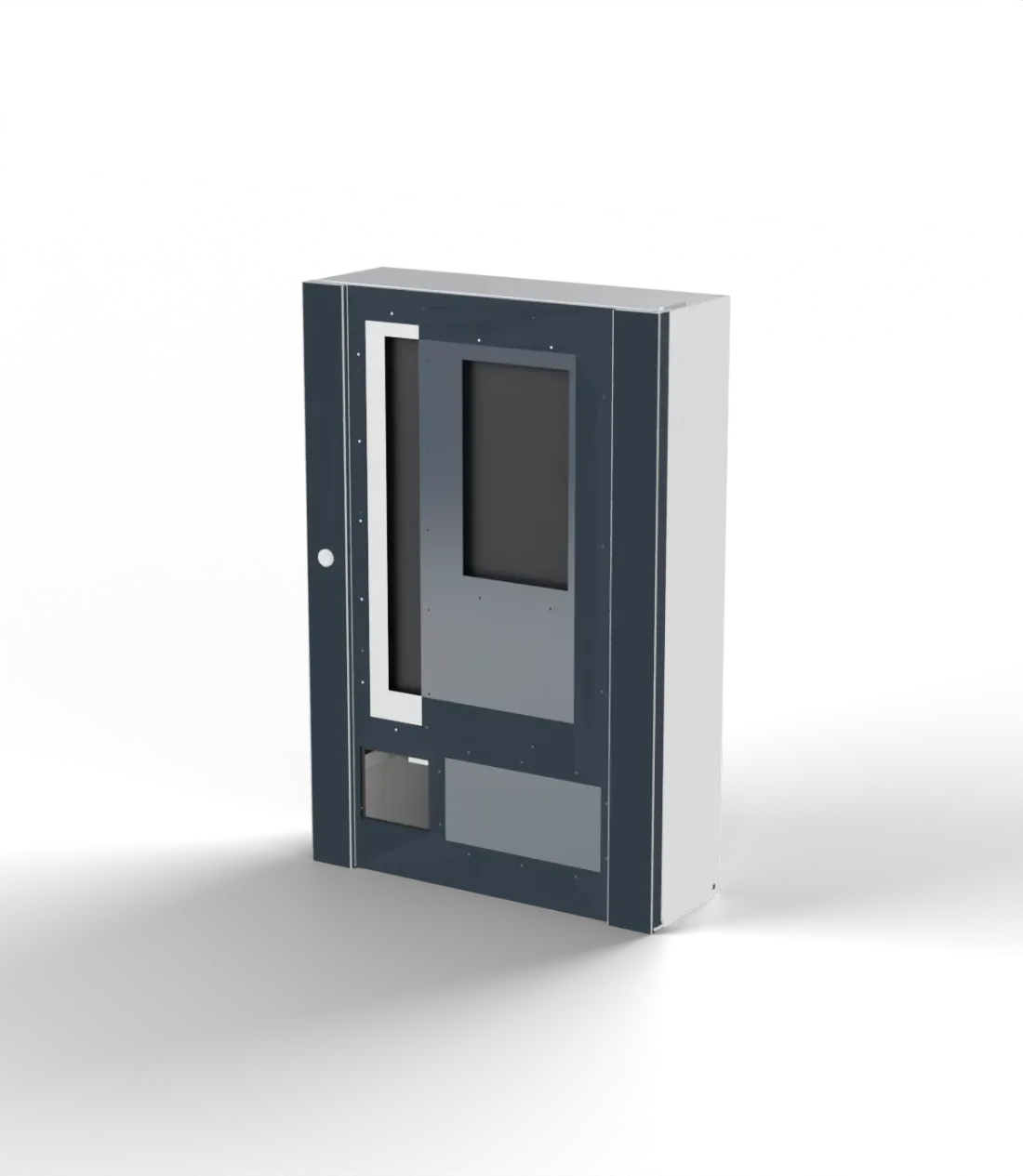
Learn · How vending works
How a vending machine works, from tap to drop.
A modern vending machine is a small, connected shop: a screen or QR code, a payment device, a controller that drives motors, sensors that check every vend, and a link to the cloud. Here is what happens in the few seconds between a customer’s tap and the product landing in the flap.
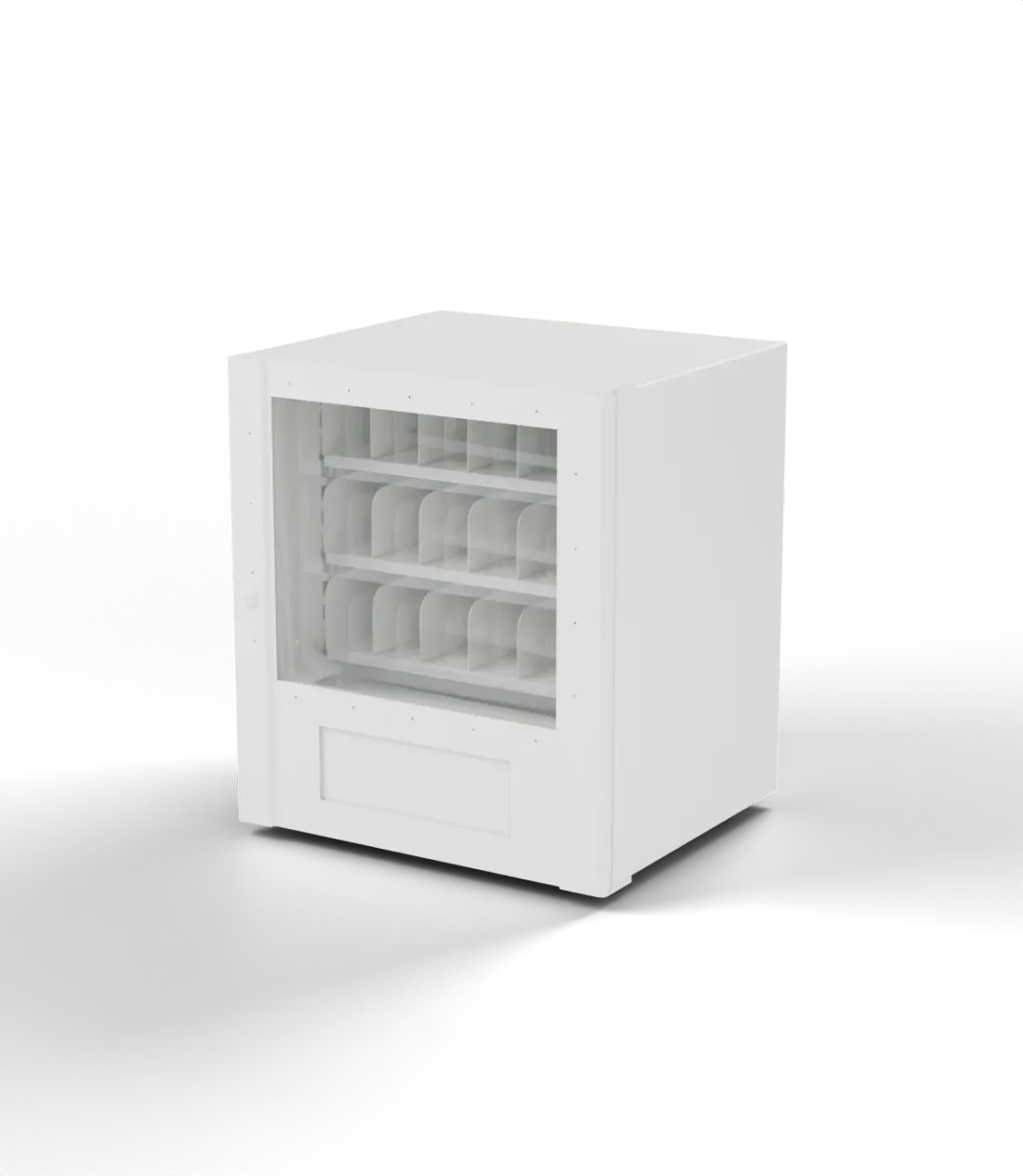
Wendor Comet, built from our engineering CAD. Drag to look through the glass at the trays and slot dividers.
The vend, in six steps
Six things happen in about ten seconds.
- 01
Browse
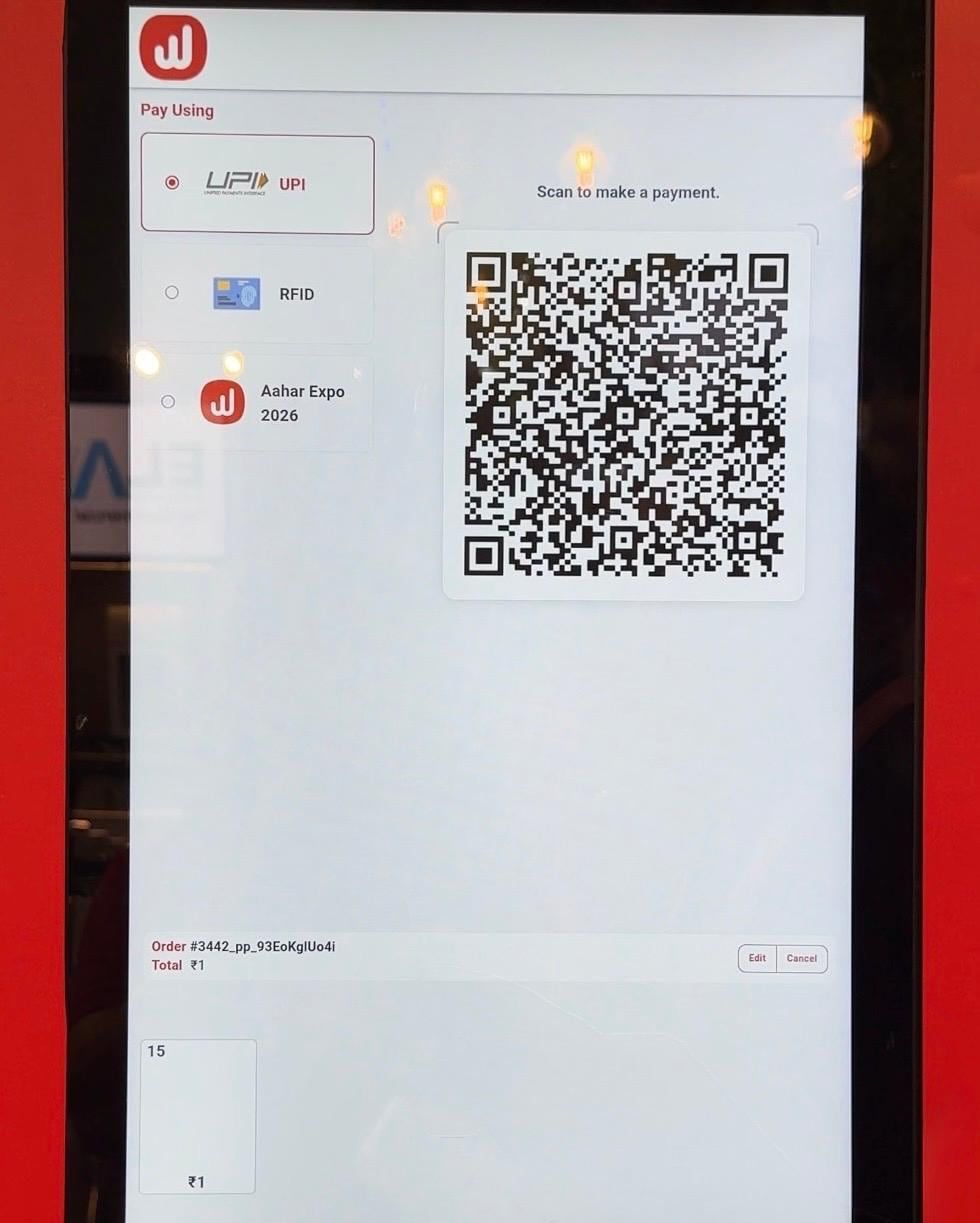
On a touchscreen machine, the customer browses products, adds items to a cart and sees the total. On a QR machine like Comet, they scan a code and do the same on their own phone.
- 02
Pay
The customer pays by UPI, card, wallet, RFID or cash, depending on the market and the machine. The payment provider confirms the payment to the machine within seconds.
- 03
Dispense
The machine’s controller turns the motor for the right slot. A spiral coil turns and pushes the product forward; on elevator machines like Nova, a lift carries it down instead of dropping it.
- 04
Confirm
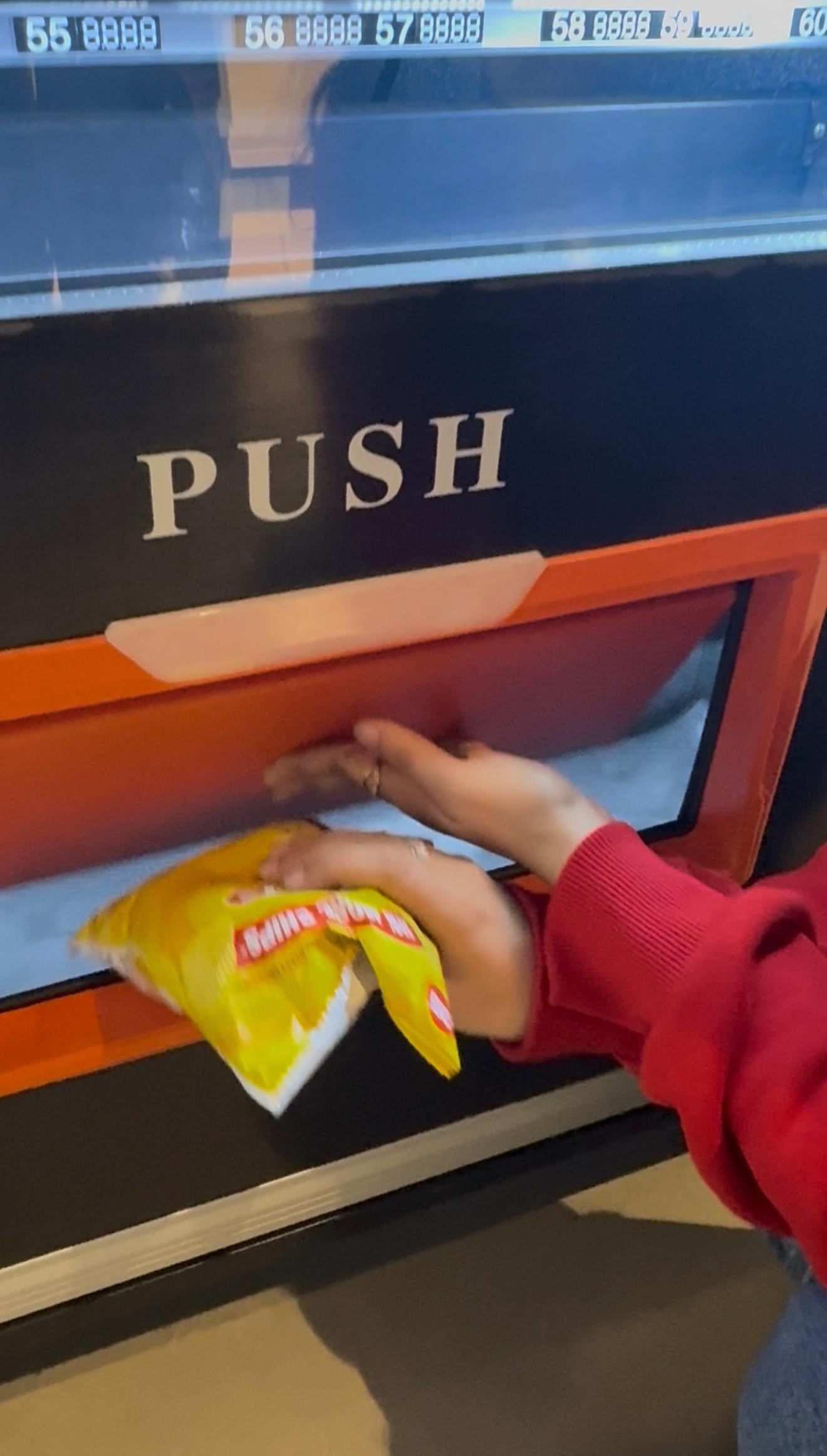
A drop sensor checks that the product actually fell. Only then does the sale count.
- 05
Refund if needed
If the sensor sees nothing, the machine marks the vend as failed and the refund goes back to the same account automatically.
- 06
Report
The sale, the slot’s new stock level and the machine’s health go to the cloud. The operator sees it on the dashboard and the refill team sees it in the Stock App.
Inside the cabinet
What you’re looking at when the door opens.
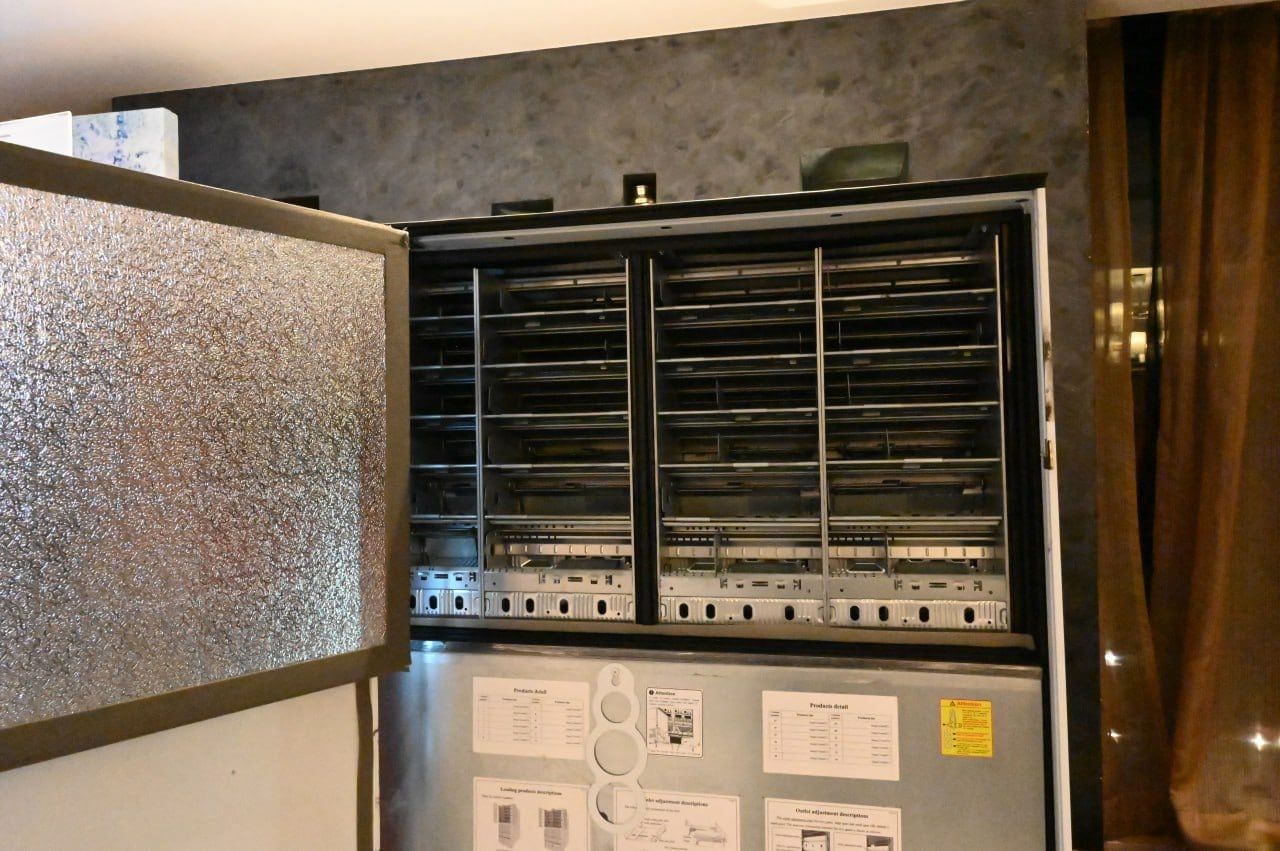
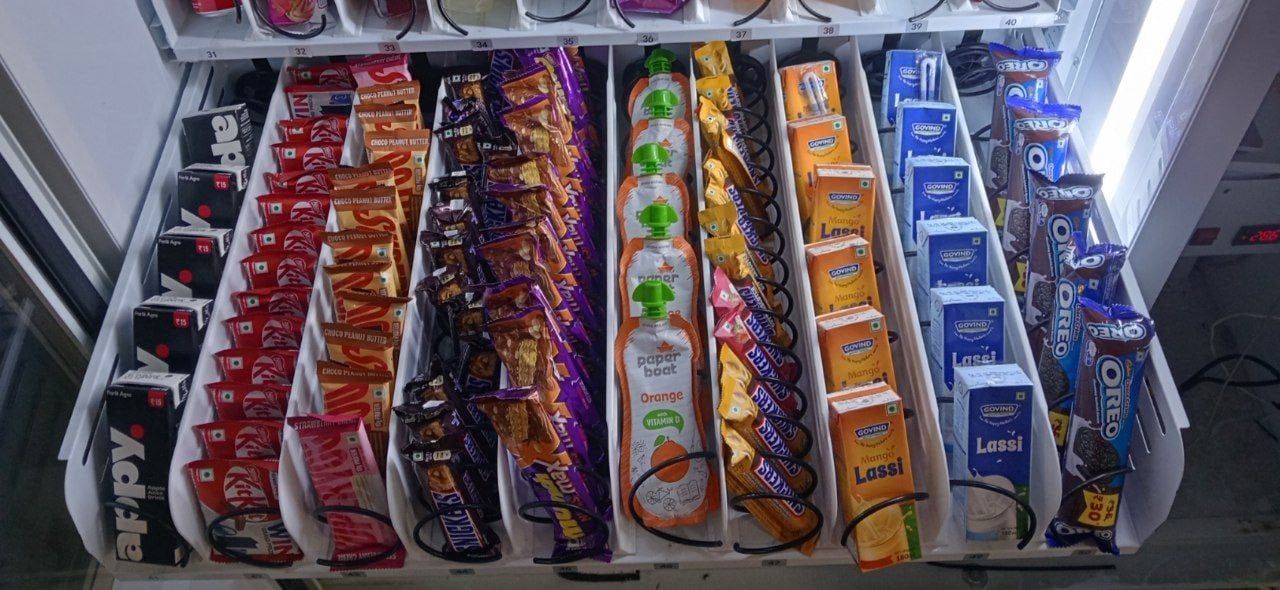
- Trays and coils
- Each tray holds rows of spiral coils. One full turn of a coil pushes one product forward. Coil pitch is matched to the product size.
- Controller
- The board that drives the motors, reads sensors and talks to the payment device and the screen. Wendor software supports 12+ controller boards.
- Drop sensor
- An infrared curtain across the delivery chute that confirms a product fell.
- Cooling
- Ambient, chilled or frozen. Chilled and frozen machines need ventilation clearance around the condenser.
- Payment device
- QR, card reader, cash or RFID, depending on the market and the machine.
- Compute and connectivity
- A small computer runs the screen and talks to the cloud for payments, stock and updates.
For existing machines
MDB: why old machines can learn new tricks.
MDB (Multi-Drop Bus) is the standard most vending machines use to talk to payment devices. Because the machine already speaks it, a new payment or touchscreen module can plug in where the old coin or card device sat, and the machine treats it like any other payment device.
- Add cashless payments without replacing the machine
- Add a touchscreen storefront and promotions
- Connect the machine to a cloud dashboard for live stock and sales
DEX is the related standard for reading a machine’s audit data (sales and cash counters).